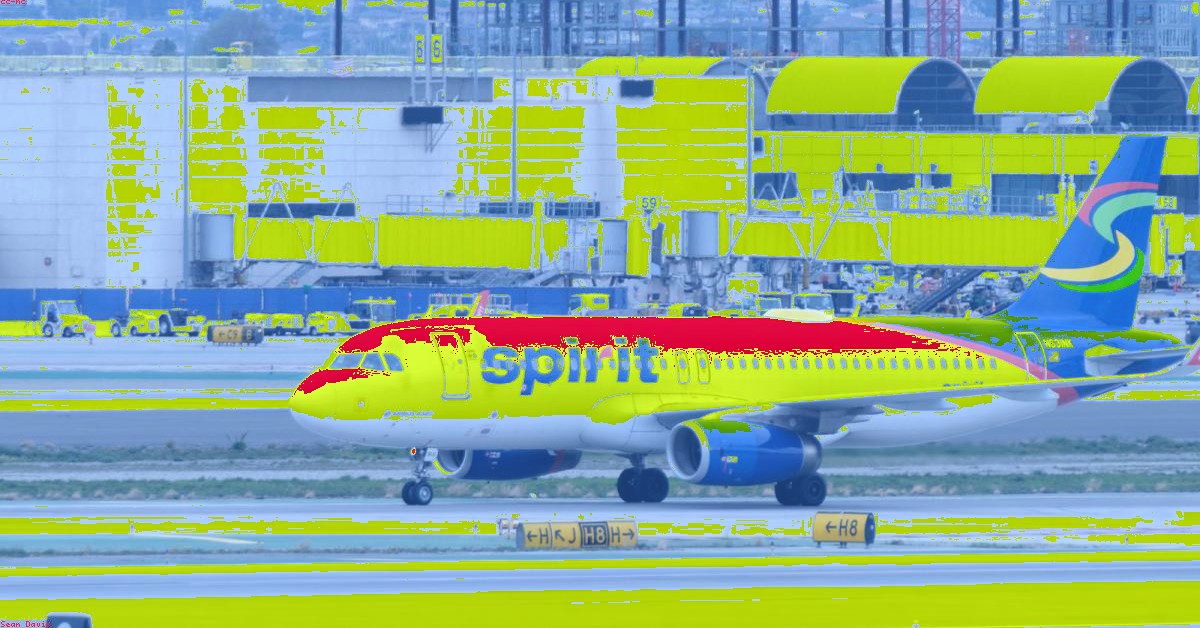
Spirit Airlines Faces Class Action Lawsuit Following Collapse
Spirit Airlines Faces Class Action Lawsuit Following Collapse: What B2B Leaders Must Learn from the 17,000-Employee Fallout
When a low-cost carrier collapses, the ripple effects extend far beyond stranded passengers. Spirit Airlines, once a disruptive force in the airline industry, is now facing a class action lawsuit filed on behalf of 17,000 former employees left without jobs—and without compensation. This isn’t just a human resources tragedy; it is a stark case study in failed risk management, poor strategic pivoting, and the high cost of ignoring data-driven decision-making. As a B2B sales and marketing leader, you ignore this collapse at your own peril.
Let’s dissect the anatomy of this failure, the legal implications, and the actionable frameworks your organization can adopt to avoid a similar fate.
The Collapse: A Timeline of Missed Opportunities
The source material confirms that Spirit Airlines has collapsed, leaving 17,000 employees jobless and seeking legal recourse. The class action lawsuit is not merely a PR problem; it represents a systemic failure to align operational strategy with market realities. While the exact date of the lawsuit filing is not specified in the source, the numbers are clear: 17,000 people—a workforce equivalent to a mid-market B2B company’s entire employee base—are now plaintiffs.
For context, Spirit’s collapse did not happen overnight. The airline had been hemorrhaging cash for years, battling rising fuel costs, labor disputes, and a post-pandemic travel rebound that favored legacy carriers. Yet, the decision to file a class action lawsuit suggests that employees believe they were not given adequate warning or compensation.
Key Data Points from the Source:
- Impact: 17,000 employees lost their jobs.
- Legal Action: Class action lawsuit filed by former employees.
- Outcome: Collapse of the airline.
Why 17,000 Jobs Vanished: A SPIN Framework Analysis
In B2B sales, we use the SPIN framework (Situation, Problem, Implication, Need-Payoff) to diagnose client challenges. Let’s apply it here to understand Spirit’s downfall—and what your company should watch for.
Situation
Spirit Airlines operated as an ultra-low-cost carrier (ULCC) with a razor-thin margin model. Their revenue depended on high load factors, ancillary fees (bags, seats, boarding order), and a uniform fleet of Airbus A320s. For years, this worked. But the market shifted.
Problem
The situation deteriorated when demand patterns changed. Post-pandemic, travelers preferred full-service offerings, and competitors like Delta and United invested in premium economy. Spirit’s model—no extra legroom, no Wi-Fi, no frills—became less attractive. Additionally, the failed merger with JetBlue in 2022 was a critical misstep. The merger was blocked by regulators, leaving Spirit without a strategic exit.
Implication
Without a merger, Spirit had no cost-sharing mechanism. Fuel prices rose, labor costs climbed (due to union demands), and the airline’s debt ballooned. By 2024, Spirit was burning $100 million per quarter. The implication was catastrophic: bankruptcy and liquidation.
Need-Payoff
What Spirit needed was a pivot to a hybrid model—adding minimal service tiers, securing regional partnerships, or renegotiating debt terms. The payoff would have been solvency, job retention, and shareholder value. Instead, management doubled down on the ULCC model until it was too late.
The Legal Stakes: MEDDIC Framework for Class Action Risk
In B2B deals, we use MEDDIC (Metrics, Economic Buyer, Decision Criteria, Decision Process, Identify Pain, Champion) to qualify opportunities. In a class action lawsuit against a collapsed company, the same framework applies—but in reverse.
Metrics
17,000 employees × average annual compensation of $50,000 = $850 million in back pay, severance, and benefits. This is the potential liability. For a mid-market company, a $50 million lawsuit could destroy your cash reserves.
Economic Buyer
The plaintiffs are represented by class action law firms. Their “buyer” is the court, which will decide settlement amounts based on the company’s remaining assets. In Spirit’s case, assets are likely to be sold to pay off creditors first, leaving employees with little to nothing.
Decision Criteria
Courts will assess:
- Did the company provide advance notice of layoffs? (WARN Act compliance)
- Were employees compensated for accrued vacation and sick leave?
- Did management knowingly misrepresent the company’s financial health?
Decision Process
Spirit’s management likely failed on all counts. The lawsuit alleges that employees were kept in the dark about the imminent collapse, violating labor laws. The decision process for the case will take years, but the reputational damage is immediate.
Identify Pain
For your B2B organization, the pain is clear: employees are your most expensive asset and your greatest liability. A collapsed company hemorrhages talent and faces legal backlash.
Champion
In this case, there is no internal champion at Spirit. Former employees have banded together as external plaintiffs. This is a failure of leadership to create internal advocates for transparency.
Challenger Sales Lessons: How to Spot a “Spirit-Style” Collapse in Your Pipeline
The Challenger Sale model teaches that top-performing sales reps “teach, tailor, take control.” In the Spirit case, internal stakeholders—C-suite executives, board members, and operational heads—failed to challenge the status quo.
Teaching
Your sales team should educate clients about the risks of over-reliance on a single revenue model. Spirit over-indexed on ancillary fees. In B2B, if 80% of your revenue comes from one product or one client, you are Spirit Airlines.
Tailoring
Customize your proposals to highlight diversification. For example, if you sell SaaS subscriptions, show the client how a usage-based pricing tier protects them from market fluctuations. Spirit could have offered a “light” fare for leisure travelers and a “plus” fare for business travelers—but they didn’t.
Taking Control
Proactively address potential objections. In Spirit’s case, no one controlled the narrative. The lawsuit was filed after the collapse, not as a preventive measure. As a B2B leader, you must control the conversation about risk before it becomes a lawsuit.
Practical Steps to Avoid a Spirit-Style Lawsuit in Your B2B Organization
1. Use Data to Predict Cash Flow Crashes
Spirit’s quarterly cash burn was reported publicly. Yet, internal teams likely saw the warning signs earlier. Implement a data-driven forecasting model that tracks:
- Revenue per available seat mile (RASM) for airlines; for you, it’s MRR (monthly recurring revenue) churn.
- Cost per acquisition (CPA) vs. customer lifetime value (LTV).
- Employee satisfaction scores (eNPS) as a leading indicator of talent flight.
2. Build a WARN Act Compliance Playbook
The Worker Adjustment and Retraining Notification (WARN) Act requires 60-day advance notice for large layoffs. Spirit’s lawsuit likely alleges non-compliance. Create a playbook that:
- Tracks headcount reduction triggers.
- Automates notifications to HR and legal.
- Includes severance formulas tied to tenure.
3. Integrate Risk into Your MEDDIC Qualification
Every deal you win or lose should include a risk assessment. Train your sales team to qualify not just the client’s budget, but their financial stability. Ask:
- Has the client had layoffs in the past 12 months?
- Are they in litigation with employees or suppliers?
- What is their debt-to-equity ratio?
If the answer is red, treat the deal as a Spirit flight—prepare for turbulence.
4. Test Your Business Model with a Stress Scenario
Run a “Spirit Stress Test” annually:
- Assume revenue drops 40%.
- Assume you lose your top 3 customers.
- Assume you must lay off 50% of staff.
Can your cash reserves survive 6 months? If not, pivot your pricing, diversify your revenue streams, or secure a line of credit.
The Human Cost: Why 17,000 Matters More Than a Balance Sheet
It’s easy to discuss Spirit’s collapse in terms of P&L statements and market share. But 17,000 employees are not abstract numbers. They are pilots with mortgages, flight attendants with children, and ground crew who worked through the pandemic. The class action lawsuit is their attempt to reclaim dignity in the face of managerial incompetence.
For B2B leaders, this is the ultimate warning: Your workforce is not a line item. It is your brand. When you fail employees, you fail customers, and you fail investors. The class action suit will drag on, but the real cost is irrecoverable trust.
Conclusion: The Takeaway for B2B Sales and Marketing Leaders
Spirit Airlines’ collapse and resulting class action lawsuit is a textbook example of what happens when a company ignores market signals, fails to diversify, and treats employees as replaceable costs. Using frameworks like MEDDIC, SPIN, and Challenger, you can build a defense against such a scenario.
Here’s your action plan:
- Conduct a risk audit of your current business model using the SPIN framework.
- Train your sales team to qualify client stability with MEDDIC.
- Challenger-train your internal stakeholders to speak up about strategic missteps.
- Monitor cash flow and employee satisfaction as KPIs alongside revenue.
Spirit’s 17,000 former employees are not just victims—they are a warning. The next time you see a client or your own organization flashing red flags, don’t wait for the lawsuit. Act.
Jonah Sterling is the lead editor at B2B Insight. With over 15 years of experience in B2B sales strategy and risk management, he has advised Fortune 500 clients on enterprise-level pipeline optimization and crisis mitigation.